The Problem
Legacy core banking systems are often the single largest obstacle to digital transformation in financial institutions. The monolithic architecture is so deeply intertwined with critical business processes that even a minor change can introduce major risks. Attempting a full system replacement in one go frequently ends in failure.
Working with multiple financial institutions, we developed an approach centered on the strangler fig pattern to address this challenge. Here's what we learned.
What Is the Strangler Fig Pattern?
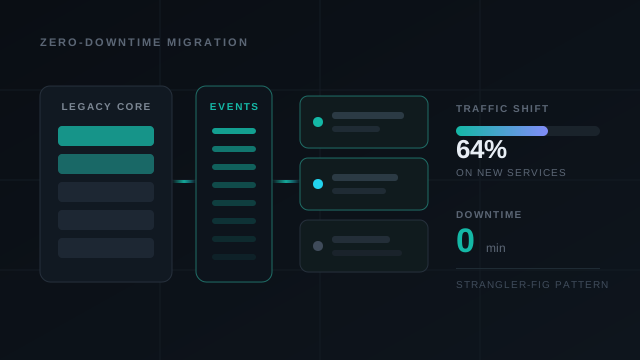
The strangler fig takes its name from a tree that grows around its host and eventually replaces it. In software, this means building the new system around the old one, migrating functionality piece by piece, and gradually decommissioning the legacy platform.
Its appeal lies here: you never make a "big bang" cutover. The system keeps running throughout the transition.
5 Critical Lessons
1. The API Layer Comes First
Before starting any modernization, you must build an API layer that covers all capabilities of the existing system. This layer acts as both a mirror of the current system and the contract to which new components will connect.
Key Insight
Design your API from the domain language, not from the legacy system's data model. Don't migrate technical debt into the API surface.
2. Don't Underestimate Data Consistency
When two systems run in parallel, data consistency becomes the biggest headache. Adopting an event-driven architecture and ensuring both systems consume the same events makes this problem manageable.
In one project we applied the following principle:
- The legacy system remains the system of record
- The new system listens to events and updates its own state
- When a module matures sufficiently, the system of record role is transferred
3. Feature Flags Are a Lifeline During Transition
Feature flags are critical for controlling which users access the new system. Start with pilot users, gather feedback, resolve issues, and expand.
4. Observability Is Mandatory for Both Systems
Without distributed tracing and centralized log management, diagnosing issues across two systems is nearly impossible. Build an OpenTelemetry-based infrastructure and connect both systems to the same tracing framework.
5. Don't Ignore the Human Factor
Modernization is not purely a technical process. Teams who have known the legacy system for years undergo both a technical and psychological transition when moving to a new platform. Investing in training and change management is as critical as the technical investment itself.
Conclusion
The strangler fig pattern demands patience but delivers remarkable results. We've observed that institutions embracing this approach — rather than attempting full rewrites — complete their transformation faster and preserve business continuity throughout.
Recommendations
- Conduct a comprehensive impact analysis before starting modernization
- Involve business units alongside the technical team from day one
- Prepare a rollback plan for each transition step
- Measure success with business metrics, not technical metrics
- Celebrate small wins; motivation in long-running programs matters